

OBORDA | OODA Investment Engine
The six zones help answer one basic question: At this price, what action makes sense given what I know about the company and what could go wrong?
A buy zone is a guide for making a decision. It is not an instruction to buy automatically. The price ranges change from stock to stock and can change when the company, the market, or the evidence changes.
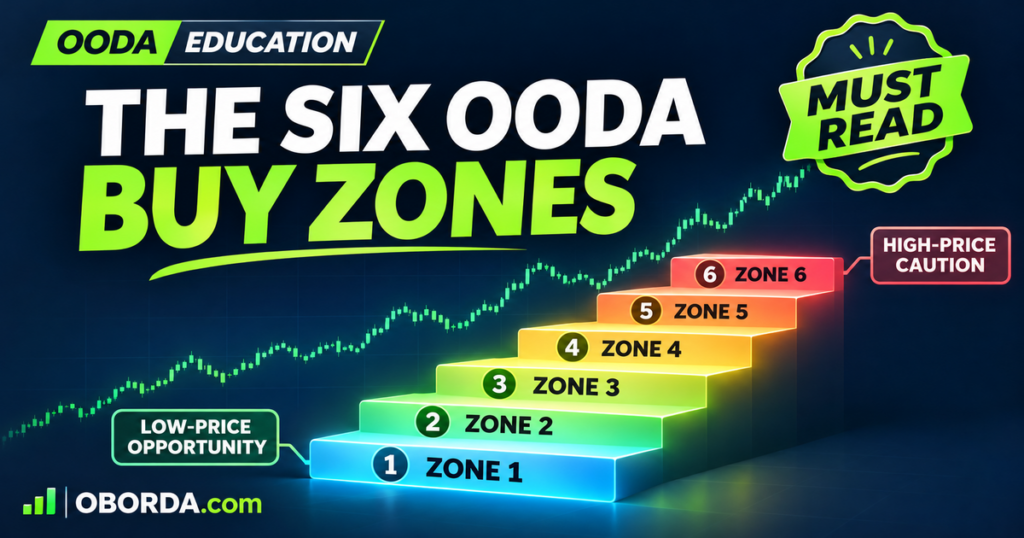
The six levels, from strongest potential opportunity to weakest
This order ranks possible risk/reward attractiveness. It does not rank safety. A very low price can be a bargain, or it can be a warning that the company has serious problems.
1. Exceptional / Reassess
What it means: The price has fallen very far and may offer a rare bargain. First find out why it fell.
A low price can mean the market is overreacting. It can also mean the business is in real trouble. Check the latest results, debt, future plans, and important news before deciding. If the company’s ability to earn money has been damaged, a lower price does not make it a bargain.
Plain English: “This is cheap enough to investigate carefully. I might buy, but only if the company still has a sound future.”
2. High Conviction
What it means: The price looks very attractive, and several important facts support the idea that the company is still healthy.
This is a strong opportunity in the analysis, but it is not guaranteed to work. “High conviction” does not mean putting all your money into one stock. A good plan still limits how much you invest.
Plain English: “I have strong reasons to buy more, but I will still be careful with the amount.”
3. Accumulation
What it means: The price is attractive enough to build a position little by little.
You might buy in several small portions instead of spending all your planned money at once. Before each purchase, check that the company and the reason for buying still make sense. Do not keep buying only because the price keeps falling.
Plain English: “I may add gradually while I keep checking the facts.”
4. Starter
What it means: The price is good enough to begin with a small purchase, but you still want more proof before buying a lot.
A starter position lets you participate if the stock rises while limiting the damage if you are early or wrong. You can add later if the company’s results or the price action give you more confidence.
Plain English: “I will start small and wait to see what happens.”
5. Watch
What it means: The stock is interesting, but the price or the evidence is not good enough for you to buy yet.
Maybe the company is strong but the stock still costs too much. Maybe the price is getting closer to a good level, but it has not stopped falling. Waiting is a choice. You can keep your money in cash until the opportunity improves.
Plain English: “I am interested, but I do not have to buy today.”
6. No New Buys / Trim Review
What it means: The stock price may be too high to offer a good deal, or you may already have more invested than you want.
A good company can still be too expensive. If you own shares, this level means review the situation. You might continue holding, sell a small part, or decide to do nothing. It does not automatically mean “sell everything.”
Plain English: “I will pause before buying more and check whether my investment still fits my plan.”
A made-up price example
Here is a pretend company called ExampleCo. These numbers are only to show how the zones work. They are not a recommendation for any real stock.
Why the reason for a price drop matters
Example A: Maybe an opportunity
A strong company’s stock falls because investors are worried about the whole market. Sales and profits are still holding up. The lower price may offer a better deal, but I still check the company and wait for signs the drop is slowing.
Example B: Maybe a warning
The same stock price appears after the company loses customers and cuts its outlook. The shares cost less, but the company may now be worth less too. I reassess before buying and may decide to stay away.
Same price, different story. The zone tells me where to pay attention. The company’s condition tells me whether buying makes sense.
How to use the zones
- Check what the company and stock are doing now.
- Find out why the price moved.
- Compare the price with the company’s likely value and risks.
- Choose whether to buy, wait, hold, trim, or reassess.
- Decide how much risk you can accept before placing an order.
These zones are guides, not promises. A stock can fall below a zone, and new information can change the plan. If two ranges meet at one price, this framework assigns that exact price to the cheaper zone.
OODA means Observe, Orient, Decide, Act. This article explains an educational framework and is not personal investment advice. Investing involves risk, including loss of principal.