
November 3, 2026 | OBORDA Investment Journal
Sometimes bad news creates good investment opportunities. The challenge is recognizing them.
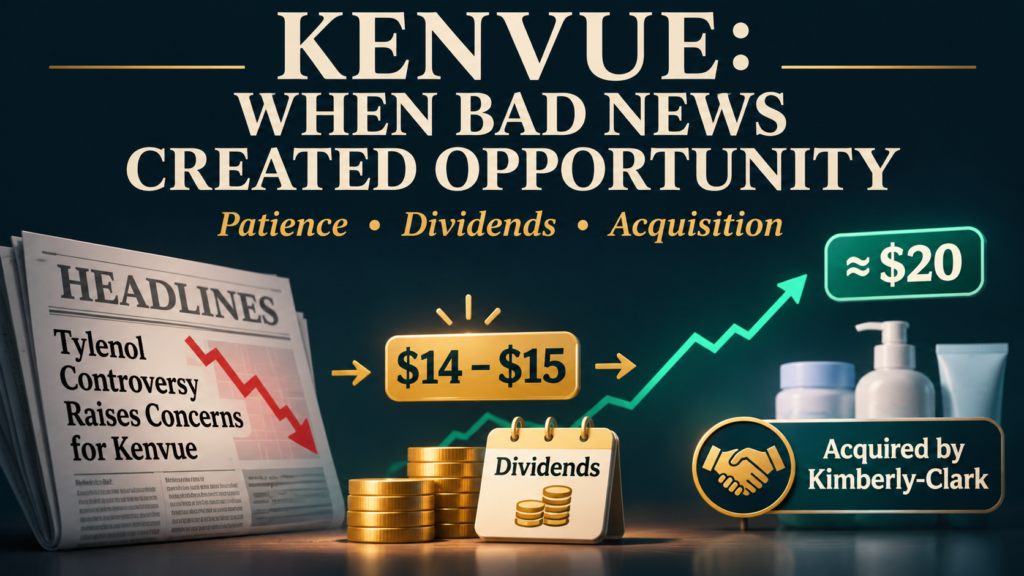
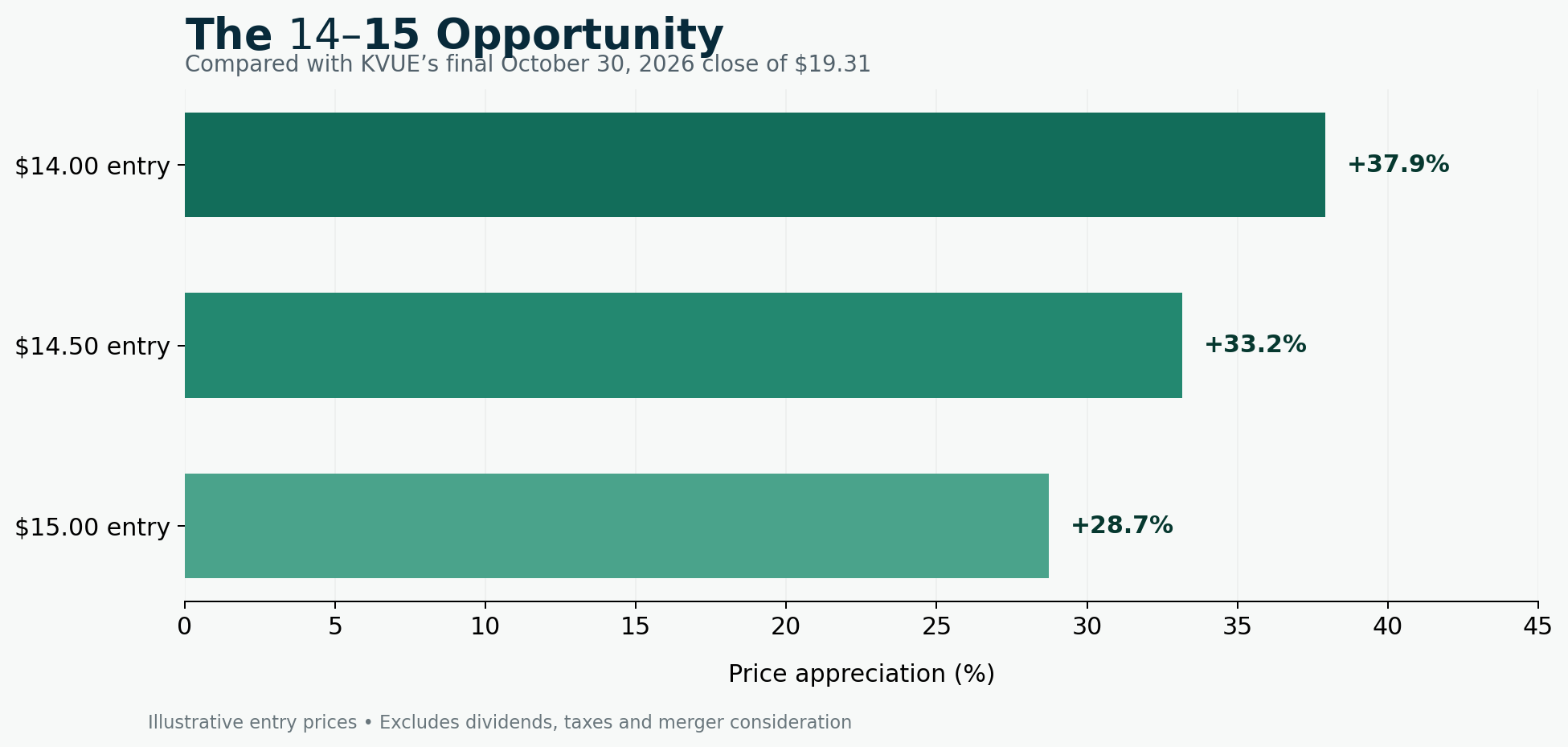
In October 2025, I was buying Kenvue (KVUE) around $14–$15 per share. By its final trading day in October 2026, KVUE was at $19.31—approximately 29%–38% above those entry prices, excluding dividends.
And here’s the interesting part: Kenvue was one of those investments I barely paid attention to.
When Bad News Created an Opportunity
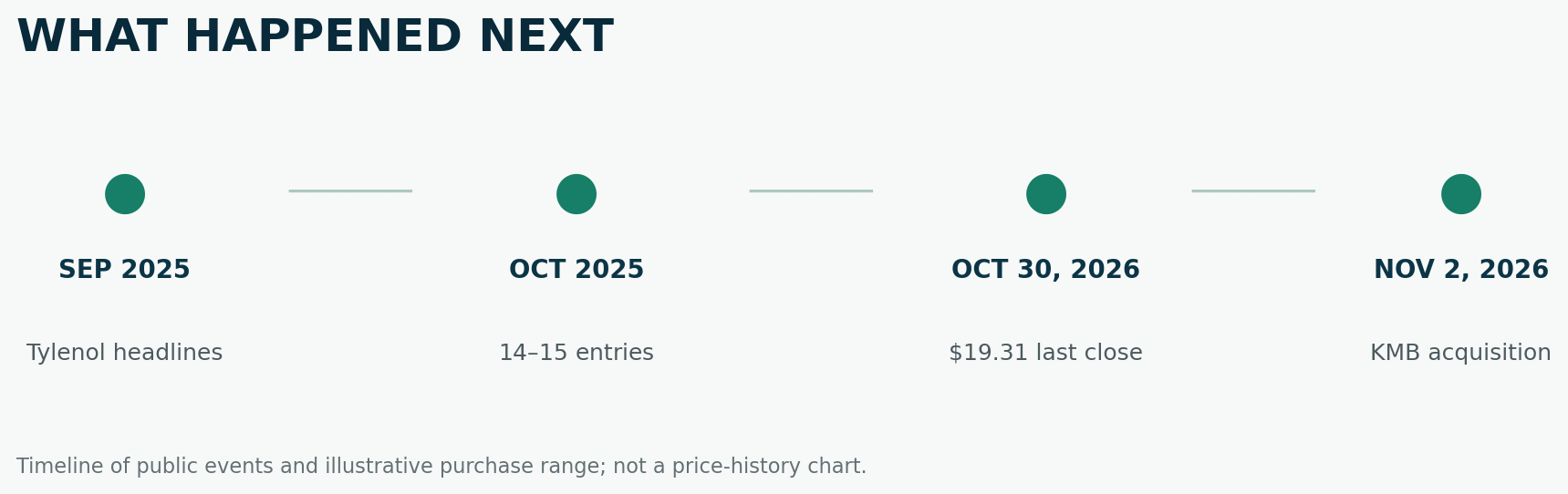
In September 2025, the Trump administration raised concerns about a possible link between acetaminophen use during pregnancy and autism. Acetaminophen is the active ingredient in Tylenol, one of Kenvue’s best-known brands. A causal link had not been established, and medical experts disputed the administration’s interpretation of the evidence (Reuters).
Negative headlines increased uncertainty around Kenvue (Axios). But the company was bigger than Tylenol: its brands also included Band-Aid, Listerine, Neutrogena, and Aveeno. I believed the selloff had created an attractive opportunity in an established consumer-health business, so I bought around $14–$15.
Getting Paid While I Waited
Kenvue also paid a dividend. While I held the stock, those payments provided income in addition to potential share-price appreciation. Dividends aren’t guaranteed, and they don’t remove the risk of a falling stock—but I appreciated being paid while I waited.
I didn’t need to trade every price movement. I was comfortable giving the investment time to develop.
Then Came Kimberly-Clark
In November 2025, Kimberly-Clark announced plans to acquire Kenvue. I hadn’t anticipated the deal; it wasn’t part of my original investment thesis.
The acquisition closed on November 2, 2026 (Kimberly-Clark announcement). Under the merger terms, each Kenvue share entitled its holder to $3.50 in cash plus 0.14625 Kimberly-Clark (KMB) shares, subject to applicable fractional-share treatment. Kenvue ceased trading independently.
That creates a new question: whether Kimberly-Clark itself is worth holding at its current valuation. A good decision to buy Kenvue doesn’t automatically answer that.
Before OODA
I made these purchases before developing the OODA investing framework. At the time, I was applying lessons learned through experience: recognize potential value, understand the risks, buy at a price that makes sense, and be patient. Experiences like Kenvue helped shape the philosophy I later formalized.
The Lesson
I didn’t predict the exact bottom. I didn’t anticipate the acquisition. And I didn’t spend every day watching the stock.
Sometimes making money isn’t about constantly finding something to do. It’s about recognizing when to act—and knowing when to let your money work for you.
OBORDA — Observe. Orient. Decide. Act.
Disclosure: This article reflects my personal investment experience, not financial advice. The illustrated returns compare selected purchase prices with KVUE’s final trading price; they exclude dividends, taxes, fees, and merger-related adjustments. They do not represent my entire position’s return.