
My streaming war investment strategy isn’t based on predicting one company that destroys everybody else.
I’m doing almost the opposite.
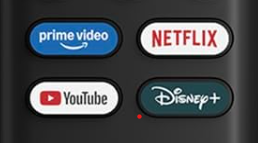
I was looking at a Fire TV remote when something caught my attention.
At the bottom were four shortcut buttons:
Prime Video. Netflix. YouTube. Disney+.
At first glance, they looked like nothing more than convenient shortcuts.
Then I started thinking about what those four buttons actually represented.
They compete with each other.
They distribute each other.
They sometimes need each other.
They compete for advertising dollars.
They compete for subscriptions.
And ultimately, they compete for the same finite resource:
our attention.
That remote stopped looking like a remote.
It started looking like a map of the battlefield.
And the more I studied the battlefield, the more I came to a different conclusion:
I don’t necessarily need to pick one winner.
I can invest across the battlefield itself.
What This Article Covers
I’m looking at six companies:
- Netflix
- Alphabet
- Amazon
- Disney
- Fox
- Skydance
They don’t occupy identical positions.
That is exactly the point.
Some control content.
Some control distribution.
Some control advertising.
Some control data.
Some control live sports and news.
Some control the interface through which consumers find everything else.
My objective is to understand where each company sits in the ecosystem—and then decide what price makes the investment attractive.
OBSERVE: THIS IS BIGGER THAN STREAMING
The traditional description of the streaming war is simple.
Netflix versus Disney.
Disney versus Amazon.
Netflix versus YouTube.
Fox versus Paramount.
But that description is incomplete.
These companies are competing across several businesses simultaneously.
There is:
Content.
Distribution.
Connected television.
Advertising.
Viewer data.
Subscriptions.
Free ad-supported streaming.
Live sports.
Broadcast television.
And underneath all of it is the real competition:
attention.
A company can compete with another company in one part of the business while simultaneously doing business with it somewhere else.
Amazon competes for viewers through Prime Video while also providing the Fire TV platform through which consumers access competing services.
Google competes for television attention through YouTube while also operating a broader television distribution ecosystem.
Fox competes for audiences and advertising while participating across broadcast television, streaming, sports, and content production.
These aren’t clean alliances.
They are overlapping relationships.
The industry increasingly operates through coopetition—competition and cooperation happening at the same time.
That changes how I look at these companies as investments.
ORIENT: FOLLOW THE MEDIA STACK
Instead of asking which streaming app will win, I started looking at the layers between the content and the consumer.
Content
Netflix built a global streaming platform around original and licensed entertainment.
Disney has Disney, Pixar, Marvel, Star Wars, ESPN, and an enormous entertainment catalog.
Fox has sports, news, broadcast programming, and Tubi.
Skydance represents another major attempt to create scale through consolidation and a large collection of entertainment assets.
Content is important.
But content is only one layer.
Distribution
Someone has to get that content onto the screen.
Amazon has Fire TV.
Google has Google TV.
Roku built a major connected-TV platform.
Apple operates its own television ecosystem.
This means the operating system on the television can become strategically important.
The company controlling the front door can potentially influence:
- discovery
- placement
- advertising
- recommendations
- customer relationships
- viewer data
The fight is no longer simply over who creates the television show.
It is also over who controls the screen where you decide to watch it.
Advertising
Streaming is increasingly becoming an advertising business.
Netflix has an ad-supported option.
Disney monetizes advertising across streaming, television, and sports.
Google already operates one of the largest advertising businesses in the world.
Amazon has developed an enormous advertising ecosystem of its own.
Fox combines traditional broadcast advertising with sports, digital streaming, and Tubi.
Subscriber count alone therefore doesn’t explain the economics anymore.
The better question is:
How much value can each company generate from every hour of viewer attention?
Data
Then there is data.
What do viewers watch?
What do they stop watching?
What do they search for?
What gets clicked?
What gets skipped?
What advertisement gets viewed?
What makes somebody return tomorrow?
Companies with direct relationships with viewers may have an additional advantage because that information can improve recommendations, advertising, and future content decisions.
Attention
And then we arrive at the most important resource.
Time.
Netflix isn’t only competing with Disney+.
Netflix competes with YouTube.
YouTube competes with sports.
Sports compete with gaming.
Gaming competes with TikTok.
Everybody is fighting for the same 24-hour day.
That is why Alphabet belongs in this conversation even though most people don’t immediately think of Google as a television company.
YouTube changed the definition of television competition.
MY STREAMING WAR INVESTMENT STRATEGY
My streaming war investment strategy starts with a simple idea:
I don’t need one company to eliminate all the others.
Several companies can create shareholder value simultaneously because they occupy different positions in the ecosystem.
Netflix can continue expanding streaming and advertising.
YouTube can continue taking television viewing time.
Amazon can benefit from Prime Video, Fire TV, and advertising.
Disney can monetize franchises, sports, and streaming.
Fox can monetize sports, news, Tubi, and advertising.
Skydance can attempt to create value through scale and consolidation.
Those outcomes are not mutually exclusive.
That is why I don’t feel compelled to bet everything on predicting a single winner.
I want ownership across several important pieces of the system.
But there is an important distinction.
Owning the battlefield does not mean buying every stock at every price.
The thesis determines what I want to own.
OODA determines when I buy it.
THE 6 STOCKS ON MY BATTLEFIELD
1. Netflix — NFLX
Netflix gives me direct exposure to global streaming.
It has scale.
Recurring revenue.
Original content.
International reach.
Advertising.
And a direct relationship with hundreds of millions of consumers.
Netflix also demonstrates why I don’t automatically buy a falling stock.
A large correction gets my attention.
It does not automatically get my money.
I need valuation, fundamentals, and technical structure to begin aligning.
NFLX Buy Zones
🔴 Above $85 — No New Buys / Trim
🟡 $76–85 — Watch
🟢 $70–76 — Starter
🟢🟢 $63–70 — Accumulation
🔥 $57–63 — High Conviction, thesis intact
⚡ Below $57 — Exceptional / Reassess
The important word is reassess.
If a high-quality company experiences an extreme decline, I want to understand why before automatically assuming the lower price represents value.
Don’t buy the dip. Buy the discount.
2. Alphabet — GOOGL
Alphabet may be one of the most interesting pieces of the entire media puzzle.
Google doesn’t need YouTube to operate exactly like Netflix.
YouTube is something different.
It is an enormous global attention platform.
Then add:
Google advertising.
Google TV.
Android.
Search.
AI.
Cloud.
Alphabet has multiple ways to monetize the movement of viewing time toward digital platforms.
GOOGL Buy Zones
🔴 Above $385 — No New Buys / Trim
🟡 $350–385 — Watch
🟢 $330–350 — Starter
🟢🟢 $300–330 — Accumulation
🔥 $270–300 — High Conviction
⚡ Below $270 — Reassess
Because Alphabet is much broader than media alone, I may accept a shallower discount than I would require from a weaker or more concentrated business.
Quality matters.
3. Amazon — AMZN
Amazon occupies another unique position.
Prime Video competes for attention.
Fire TV participates in distribution.
Amazon advertising monetizes audiences.
Prime deepens the consumer relationship.
AWS provides another enormous economic engine entirely outside entertainment.
Amazon therefore doesn’t necessarily need Prime Video to defeat Netflix.
Its advantage may come from controlling multiple pieces surrounding the viewing experience.
AMZN Buy Zones
🔴 Above $270 — No New Buys / Trim
🟡 $245–270 — Watch
🟢 $230–245 — Starter
🟢🟢 $210–230 — Accumulation
🔥 $190–210 — High Conviction
⚡ Below $190 — Reassess
I can love the business and still dislike the entry price.
Those are different decisions.
Don’t chase.
4. Disney — DIS
Disney occupies another section of the battlefield.
Disney+.
Hulu.
ESPN.
ABC.
Marvel.
Pixar.
Star Wars.
Theme parks.
Licensing.
Sports gives Disney something particularly valuable because live programming behaves differently from on-demand entertainment.
A viewer can wait until tomorrow to watch a scripted series.
Most sports fans don’t want to watch Sunday’s game on Tuesday.
That urgency creates value.
DIS Buy Zones
🔴 Above $115 — No New Buys / Trim
🟡 $105–115 — Watch
🟢 $98–105 — Starter
🟢🟢 $92–98 — Accumulation
🔥 $84–92 — High Conviction
⚡ Below $84 — Reassess
Disney doesn’t need to become Netflix.
Its assets give it different ways to compete.
5. Fox — FOXA
Fox may be one of the companies that made this entire thesis more interesting to me.
FOX isn’t simply trying to build another Netflix clone.
Its strongest assets include:
Sports.
News.
Broadcast television.
Tubi.
Advertising.
Live programming behaves differently from traditional scripted content.
You can watch an episode later.
The value of live sports and news often comes from watching now.
That creates scarcity.
FOXA Buy Zones
🔴 Above $72 — No New Buys / Trim
🟡 $64–72 — Watch
🟢 $59–64 — Starter
🟢🟢 $54–59 — Accumulation
🔥 $48–54 — High Conviction
⚡ Below $48 — Reassess
Fox doesn’t have to defeat Netflix for the investment thesis to work.
It needs to continue creating economic value from the parts of media where it has competitive advantages.
6. Skydance — SKYD
Skydance represents the consolidation side of the thesis.
The opportunity is easy to understand:
Scale.
Major media assets.
Large content libraries.
Streaming.
Broadcast.
Potential operating efficiencies.
But scale also introduces risk.
Debt.
Integration.
Execution.
Corporate complexity.
That means I treat this company differently from the others.
SKYD
⚡ Price Discovery / Reassess
Before establishing normal buy zones, I want a clearer picture of:
- enterprise value
- EBITDA
- free cash flow
- debt reduction
- integration execution
- expected synergies
- technical support
- market reaction
I don’t need to manufacture a buying opportunity.
Sometimes the appropriate action is:
wait.
Cash is a position.
CURRENT MEDIA BATTLEFIELD MAP
| Company | OODA Position | Accumulation Zone |
|---|---|---|
| NFLX | 🟢🟢 Accumulation | $63–70 |
| GOOGL | 🟢 Starter | $300–330 |
| AMZN | 🟡 Watch | $210–230 |
| DIS | 🟢 Starter | $92–98 |
| FOXA | 🟢 Starter | $54–59 |
| SKYD | ⚡ Reassess | TBD |
These are not permanent price targets.
They are working risk/reward zones.
Earnings change.
Guidance changes.
Valuation changes.
Technical support changes.
Competitive conditions change.
When the facts change, the zones should change.
That’s the purpose of OODA.
I’M BUILDING MY OWN MEDIA ETF
This is the portfolio-management part of the strategy.
I don’t need equal amounts of every company.
And I don’t need to buy every company simultaneously.
Netflix could be in accumulation while Amazon remains a watch.
Google could become attractive while Disney becomes extended.
Fox could enter high conviction while another position becomes too expensive.
The companies can belong to the same investment thesis while having completely different entry points.
That is the foundation of my streaming war investment strategy:
Identify the companies I want to own first. Then let valuation, fundamentals, technical structure, and risk/reward determine when capital gets deployed.
In other words:
I am building my own media ETF.
Except I control the holdings.
I control the weighting.
I control the entry prices.
And I can hold cash when I don’t like the opportunities being offered.
OODA
Observe
Television is shifting toward streaming, connected devices, digital advertising, and direct relationships between platforms and viewers.
The boundaries between technology companies, media companies, and distributors are becoming increasingly blurred.
Orient
Netflix, Alphabet, Amazon, Disney, Fox, and Skydance occupy different strategic positions.
Some control content.
Some control distribution.
Some control advertising.
Some control data.
Some control live programming.
Some control several layers simultaneously.
Decide
I want exposure across several major participants rather than making the entire thesis dependent on one company becoming the sole winner.
But that does not mean every company deserves the same amount of capital.
Business quality matters.
Valuation matters.
Balance sheets matter.
Growth matters.
Risk matters.
Price matters.
Act
Buy only when individual stocks move into attractive risk/reward zones.
Don’t chase a company simply because I want to own it.
Don’t average down simply because a stock fell.
And don’t mistake a correction for a discount.
THE BOTTOM LINE
My streaming war investment strategy isn’t about buying every media company or predicting which logo eventually dominates the television screen.
It is about recognizing that several companies may create enormous value from different parts of the same transformation.
If Netflix grows, I participate.
If YouTube captures more television attention, I participate.
If Amazon strengthens its position in connected television and advertising, I participate.
If Disney monetizes its intellectual property and sports ecosystem, I participate.
If Fox expands its streaming and advertising business, I participate.
If Skydance successfully creates value through consolidation, I can participate.
I don’t have to know which flag will eventually be left standing.
I’m buying the battlefield—but only when the battlefield goes on sale.
Observe. Orient. Decide. Act.
OODA Investment Engine — October 5, 2026. Buy zones represent analytical risk/reward ranges, not guarantees. Fundamentals, valuation, technical conditions, and market structure should be reassessed as conditions change.